Data and Research
← Back to All Wins
National Immigrant and Mental Health Membership Research Report
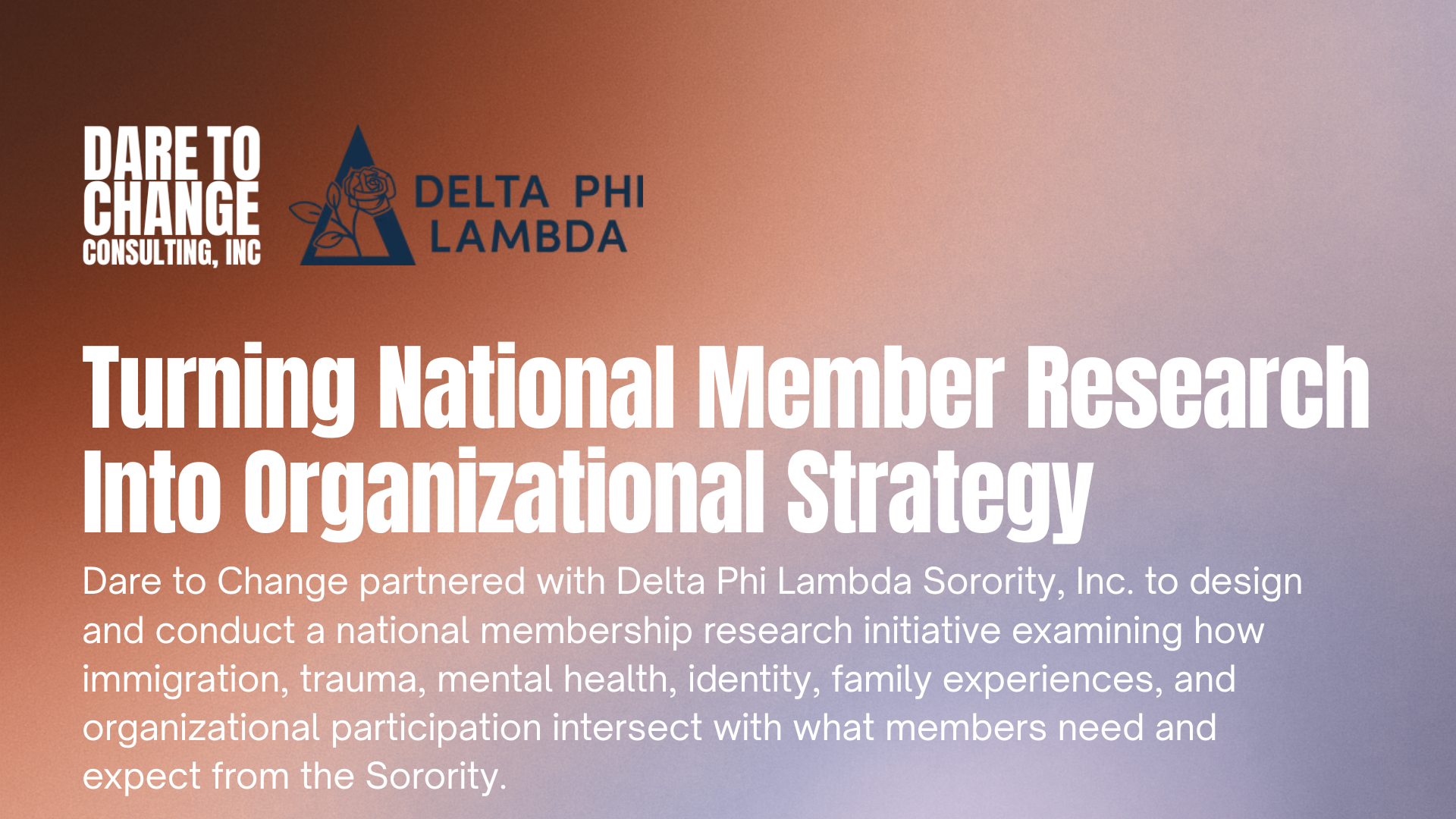
Rather than approaching the engagement as a traditional member-satisfaction survey, DTC developed a research framework centered on the lived experiences behind organizational needs. The survey explored immigration and migration experiences, family and intergenerational dynamics, perceptions of trauma, mental and emotional well-being, experiences within the organization, member priorities, expectations of leadership, desired programs and resources, and perspectives on Delta Phi Lambda’s future.
A central component of the research examined how immigration and trauma may influence mental health and organizational engagement. For members of Asian American communities, these experiences can extend beyond an individual’s own immigration history and include family migration, cultural adaptation, intergenerational expectations, identity, displacement, and other factors affecting well-being. DTC therefore examined mental health not only as an individual issue, but in relation to belonging, participation, community support, programming needs, and expectations of the institution itself.
Following survey deployment, DTC analyzed the national membership data to identify major patterns, recurring themes, unmet needs, organizational gaps, and opportunities for change. The analysis connected member experiences to the infrastructure and programs already available within the Sorority, allowing the research to move beyond documenting sentiment and toward understanding what the findings meant for organizational decision-making.
DTC then developed a comprehensive research report translating the findings into an assessment of membership experiences, mental health considerations, immigration and trauma-related themes, institutional needs, member expectations, programmatic opportunities, and strategic implications. Recommendations addressed areas including member support, culturally responsive mental health and wellness programming, organizational programming, leadership priorities, organizational culture, belonging, and long-term planning.
A central component of the research examined how immigration and trauma may influence mental health and organizational engagement. For members of Asian American communities, these experiences can extend beyond an individual’s own immigration history and include family migration, cultural adaptation, intergenerational expectations, identity, displacement, and other factors affecting well-being. DTC therefore examined mental health not only as an individual issue, but in relation to belonging, participation, community support, programming needs, and expectations of the institution itself.
Following survey deployment, DTC analyzed the national membership data to identify major patterns, recurring themes, unmet needs, organizational gaps, and opportunities for change. The analysis connected member experiences to the infrastructure and programs already available within the Sorority, allowing the research to move beyond documenting sentiment and toward understanding what the findings meant for organizational decision-making.
DTC then developed a comprehensive research report translating the findings into an assessment of membership experiences, mental health considerations, immigration and trauma-related themes, institutional needs, member expectations, programmatic opportunities, and strategic implications. Recommendations addressed areas including member support, culturally responsive mental health and wellness programming, organizational programming, leadership priorities, organizational culture, belonging, and long-term planning.